


Ask the Experts24/7 Online Support
Ask the Experts24/7 Online Support
 August 10, 2026 14:30PM
 0 Comments | Post a Comment
LOCO Posted on [ Aug 10, 2026 14:30PM ]
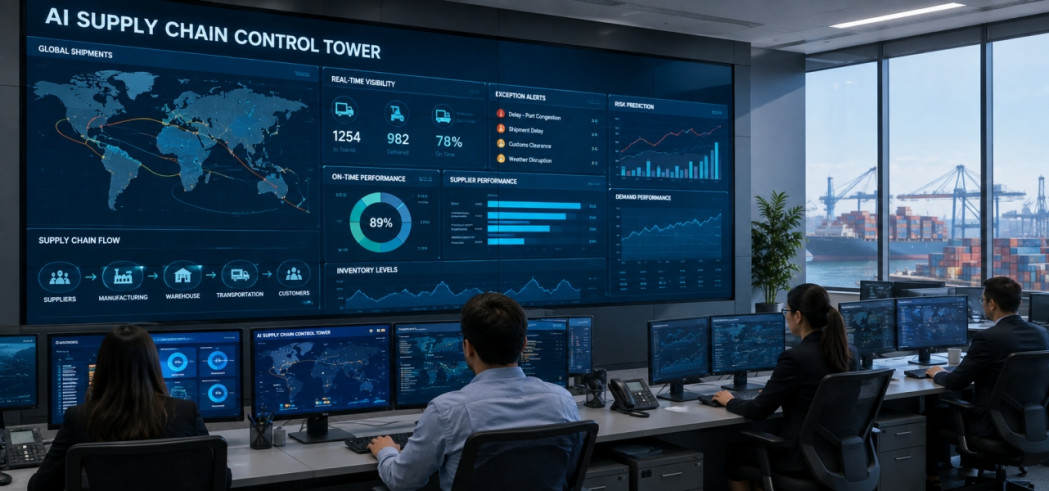
AI Supply Chain Control Towers: The Next Step in Logistics Visibility
Modern supply chains operate across multiple suppliers, manufacturers, warehouses, transportation providers, ports, and customers. With so many interconnected activities, businesses need more than basic shipment tracking. They need a complete, real-time view of what is happening across the supply chain and the ability to respond quickly when problems arise.
This is where AI Supply Chain Control Towers are becoming increasingly important. By combining artificial intelligence, real-time data, predictive analytics, automation, and advanced visualization, control towers can transform fragmented supply chain information into actionable intelligence.
What Is a Supply Chain Control Tower?
A supply chain control tower is a centralized digital platform that provides visibility across different stages of the supply chain. It can bring together data from transportation systems, warehouses, suppliers, inventory platforms, ERP systems, ports, and other operational sources.
An AI-powered control tower goes further by analyzing this data to identify risks, predict disruptions, recommend actions, and support faster decision-making.
Instead of simply showing that a shipment is delayed, AI can help determine why it is delayed, what impact it may have, and what action should be taken.
How AI Improves Supply Chain Visibility
1. Real-Time Data Integration
AI control towers can combine information from multiple systems into a unified operational view. This helps logistics teams monitor shipments, inventory, orders, supplier performance, and transportation activities from a single platform.
2. Predictive Analytics
AI can analyze historical and real-time data to identify potential disruptions before they become major problems. For example, it can detect patterns associated with transportation delays, inventory shortages, or supplier risks.
3. Intelligent Alerts
Traditional systems may generate large numbers of notifications. AI can prioritize alerts according to business impact, helping supply chain managers focus on the most critical issues.
4. Prescriptive Decision-Making
The next evolution is moving from “What happened?” to “What should we do?” AI can evaluate different options and recommend actions such as changing transportation routes, adjusting inventory levels, or selecting alternative suppliers.
Benefits for Logistics Operations
AI-powered control towers can provide several benefits:
By connecting previously isolated data sources, businesses can gain a clearer understanding of their complete supply chain.
Applications Across Logistics
AI control towers can be used across transportation, warehousing, procurement, manufacturing, and international trade.
In transportation, they can monitor fleet movements and predict delays. In warehousing, they can identify inventory risks and capacity constraints. In procurement, AI can monitor supplier performance and potential supply risks.
For exporters and importers, control towers can provide greater visibility into shipments, ports, customs processes, and international transportation.
Challenges
Implementing an AI supply chain control tower is not without challenges. Businesses may face:
Companies should therefore establish strong data governance and introduce AI gradually, starting with high-value use cases.
Future of AI Control Towers
The future of supply chain control towers will increasingly involve generative AI, autonomous decision-making, digital twins, IoT, and machine learning. These technologies could enable systems to identify disruptions, simulate possible outcomes, and recommend or automatically execute corrective actions.
As supply chains become more complex, real-time intelligence will become a competitive advantage rather than simply a technology upgrade.
Conclusion
AI Supply Chain Control Towers represent the next stage of logistics visibility. They move supply chain management beyond basic tracking by combining real-time information with predictive and prescriptive intelligence. For logistics companies, manufacturers, retailers, and global supply chain operators, adopting AI-powered visibility platforms can improve resilience, reduce costs, and enable faster decisions. As technology continues to advance, intelligent control towers are likely to become a central component of the digital supply chain of the future.
Customer Reviews (0 )
No record(s) Found !
 Categories