


Ask the Experts24/7 Online Support
Ask the Experts24/7 Online Support
 August 13, 2026 19:35PM
 0 Comments | Post a Comment

LOCO Posted on [ Aug 13, 2026 19:35PM ]
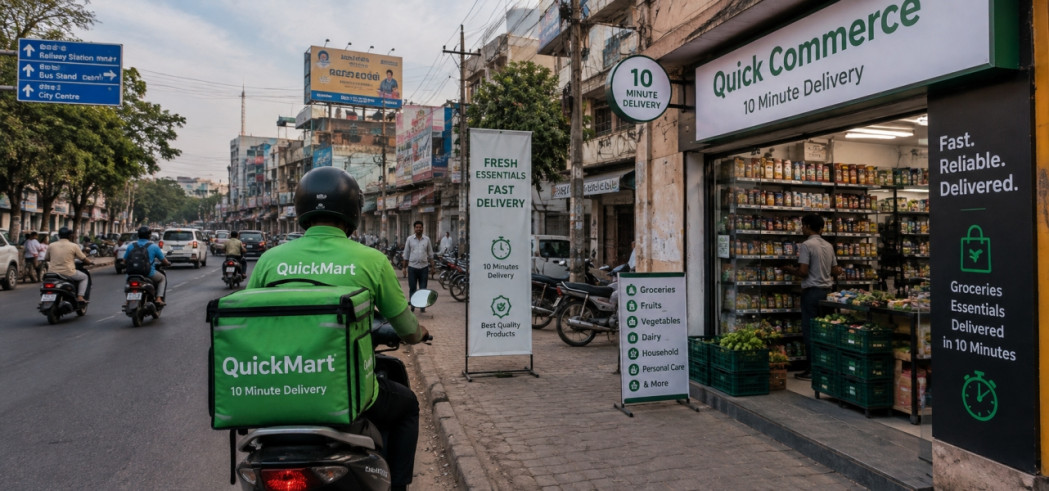
Quick Commerce Beyond Metros: Can the Model Work in Tier-2 Cities?
Quick commerce has transformed India's e-commerce and logistics industry by enabling consumers to receive groceries, household essentials, personal-care products, and other everyday items within a short delivery window. While the model initially gained strong traction in major metropolitan cities, companies are increasingly looking toward Tier-2 and Tier-3 cities for their next phase of growth.
The expansion presents a significant opportunity, but the economics of quick commerce outside major metros can be very different. Population density, purchasing behaviour, delivery distances, local competition, and infrastructure will determine whether the model can become sustainable.
Why Tier-2 Cities Matter
India's smaller cities are experiencing rapid digital adoption. Smartphone usage, digital payments, e-commerce awareness, and changing consumer lifestyles are creating new opportunities for online retail.
Consumers in Tier-2 cities are increasingly looking for convenience and faster delivery. However, expectations may differ from those in metropolitan markets. Businesses therefore need to understand local demand instead of simply copying a metro-city operating model.
Dark Stores and Local Fulfilment
Dark stores are an important part of quick-commerce operations. These facilities are designed specifically to process online orders and are located close to customers.
In Tier-2 cities, choosing the right location becomes particularly important. Lower property costs can be an advantage, but lower order density may make it difficult to maintain high dark-store utilization.
Companies may need smaller fulfilment centers, localized product ranges, and flexible operating models.
The Importance of Delivery Density
Quick commerce depends heavily on delivery density. More orders within a smaller geographical area allow delivery partners to complete more deliveries with fewer kilometres travelled.
Some Tier-2 cities have relatively dispersed residential areas, which can increase delivery costs. Route optimization, demand forecasting, delivery batching, and strategically located fulfilment centers can help improve efficiency.
Localized Product Selection
Consumer preferences are not identical across India. Regional food products, local brands, household products, and seasonal demand can influence purchasing behaviour.
Quick-commerce companies can use customer data to develop city-specific product assortments. Localized inventory can improve product availability while reducing slow-moving stock and wastage.
Role of Technology
Technology can make expansion into smaller cities more efficient. AI and data analytics can help businesses:
Real-time operational data can help companies continuously adjust their logistics network.
Major Challenges
Despite the opportunity, Tier-2 expansion faces several challenges:
The biggest challenge is finding a balance between delivery speed and profitability.
Could a Different Model Work?
The future of quick commerce in smaller cities may not necessarily depend on extremely fast delivery. A 20–30-minute delivery model or scheduled rapid delivery could sometimes be more commercially sustainable.
Companies could also combine dark stores with supermarkets, local retailers, conventional warehouses, and regional distribution centers. This hybrid approach can provide faster delivery without requiring a dense network of fulfilment facilities.
Future Outlook
Tier-2 cities could become an important growth market for India's e-retail and logistics industry. However, success will depend on localization, operational efficiency, technology, and realistic delivery promises.
Companies that understand local consumer demand and build flexible fulfilment networks will be better positioned to expand sustainably.
Conclusion
Quick commerce in Tier-2 cities has considerable potential, but the model cannot simply replicate metropolitan operations. Lower order density, different consumer behaviour, and higher delivery costs require a more flexible approach.
The successful model will likely combine localized inventory, efficient dark stores, data-driven planning, optimized delivery routes, and realistic delivery timelines.
As India's smaller cities continue to embrace digital commerce, quick commerce could become an important part of the country's evolving e-retail and logistics ecosystem.
Customer Reviews (0 )
No record(s) Found !
 Categories