


Ask the Experts24/7 Online Support
Ask the Experts24/7 Online Support
 August 04, 2026 13:49PM
 0 Comments | Post a Comment
LOCO Posted on [ Aug 04, 2026 13:49PM ]
Reverse Logistics in Online Retail: Turning Product Returns into Business Value
The rapid growth of online shopping has transformed the retail industry, making product returns a regular part of business operations. Unlike traditional logistics, which focuses on delivering products to customers, reverse logistics manages the movement of returned goods from customers back to retailers, warehouses, manufacturers, or recycling facilities. An efficient reverse logistics system helps businesses reduce costs, recover product value, improve customer satisfaction, and support sustainability goals.
As India's e-commerce market continues to expand, reverse logistics has become a critical component of modern supply chain management.
What is Reverse Logistics?
Reverse logistics refers to the process of transporting returned, damaged, defective, or unwanted products from customers back into the supply chain. The objective is to inspect, repair, refurbish, recycle, or responsibly dispose of returned products while minimizing financial losses.
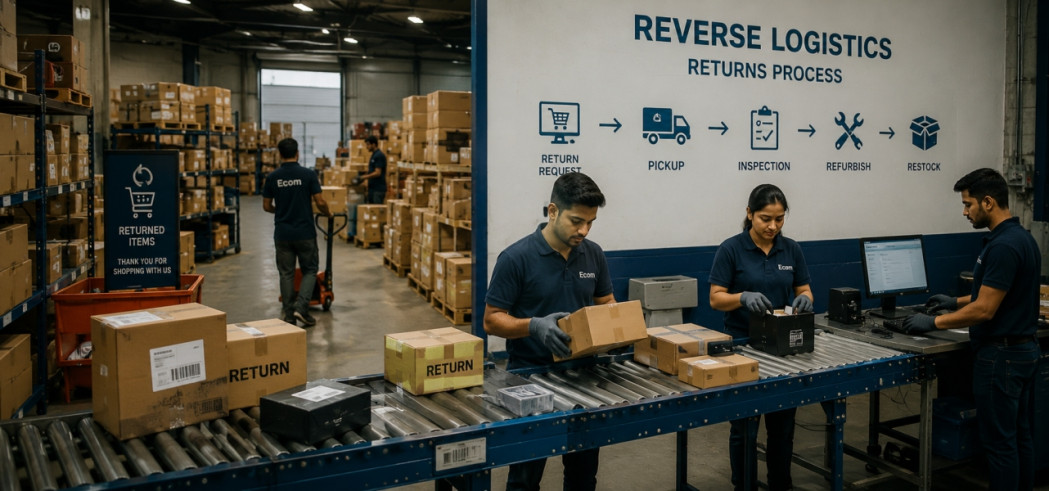
In online retail, reverse logistics includes return requests, product pickup, transportation, quality inspection, inventory updates, refunds or replacements, and product recovery.
Why Reverse Logistics Matters
A smooth return process builds customer trust and encourages repeat purchases. Efficient reverse logistics also enables retailers to recover value from returned products instead of treating them as losses.
Key benefits include:
An optimized return process has become a competitive advantage for online retailers.
Key Challenges
High Return Volumes
Fashion, electronics, and lifestyle products often experience high return rates due to incorrect sizes, damaged items, or customer preferences. Managing large return volumes efficiently remains a significant challenge.
Transportation Costs
Collecting returned products from multiple customer locations increases transportation expenses and affects profitability.
Inventory Management
Returned products must be inspected, categorized, and updated in inventory quickly. Delays can lead to stock inaccuracies and reduced resale opportunities.
Fraud and Product Damage
Retailers also face issues such as fraudulent returns, damaged products, and missing accessories, making quality inspection an essential part of the process.
Technology in Reverse Logistics
Digital technologies are improving return management across the supply chain.
Key technologies include:
These technologies automate return processing, improve inventory visibility, optimize transportation, and enhance operational efficiency.
Best Practices
Retailers can improve reverse logistics by adopting these strategies:
These practices reduce costs while improving customer experience.
Sustainability Benefits
Reverse logistics plays an important role in building sustainable supply chains. Repairing, refurbishing, and recycling returned products reduces landfill waste, conserves resources, and supports circular economy initiatives. Many retailers are also adopting eco-friendly packaging and consolidated return shipments to reduce carbon emissions.
Future Outlook
The future of reverse logistics will be driven by AI-powered automation, predictive analytics, robotics, smart warehouses, and digital return platforms. Businesses will increasingly use data to predict return behaviour, optimize inventory recovery, and improve customer service. As e-commerce continues to grow, reverse logistics will become an essential strategy for improving profitability, operational efficiency, and environmental sustainability.
Conclusion
Reverse logistics has evolved from a support function into a strategic business process for online retailers. Efficient return management not only improves customer satisfaction but also reduces operational costs, increases product recovery, and supports sustainable business practices. Companies that invest in digital technologies, smart warehousing, and efficient reverse logistics networks will gain a competitive advantage in the rapidly expanding e-commerce industry.
Customer Reviews (0 )
No record(s) Found !
 Categories