


Ask the Experts24/7 Online Support
Ask the Experts24/7 Online Support
India |
December 27, 2025 | 10:54 AM
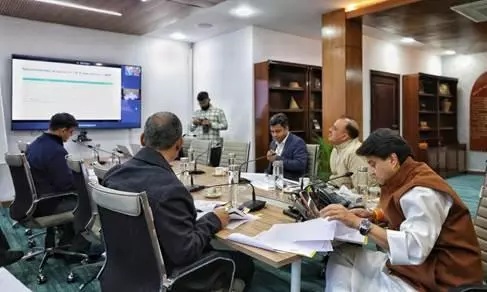
High-Level Task Force Reviews Logistics Costs & Connectivity Roadmap for Northeast India
New Delhi / Agartala, December 26, 2025 — A high-profile task force examining logistics bottlenecks, connectivity gaps and freight movement challenges in Northeast India held its third meeting on December 22, 2025, with a strong emphasis on lowering logistics costs and strengthening multimodal infrastructure across the region.
The meeting — chaired by Tripura Chief Minister Prof. (Dr.) Manik Saha — brought together chief ministers, senior state officials, and representatives of central ministries to review ongoing challenges in freight transport and discuss a comprehensive connectivity roadmap that covers short-, medium- and long-term priorities.
Why the Northeast Logistics Review Matters
The Northeast region of India — encompassing states like Assam, Tripura, Mizoram, Manipur, Nagaland, Meghalaya, Arunachal Pradesh and Sikkim — has long struggled with high logistics costs, limited connectivity and geographical constraints that hinder economic growth and supply chain efficiency.
Due to rugged terrain, limited rail networks and reliance on over-extended road routes via the narrow Siliguri Corridor, freight movement remains slow and expensive compared to other regions.
Studies show that logistics costs in India add significant burdens on freight movement — although national averages are falling towards single digits, regional disparities persist with the Northeast often facing disproportionately high transport costs.
Major Focus Areas of the Task Force Review
1. Identifying Logistics Bottlenecks
The task force assessed key constraints across the region’s transport ecosystem, including:
These constraints have resulted in higher freight charges, longer transit times and reduced competitiveness for Northeast goods in national markets.
2. A Unified Regional Roadmap for Connectivity
Chief Minister Manik Saha presented a phase-wise roadmap outlining coordinated strategies across sectors such as:
The roadmap promotes treating the Northeast as a single, unified logistics region to optimize planning, implementation and connectivity outcomes.
3. Strategic Role of Mizoram and Act East Policy
Mizoram Chief Minister Lalduhoma underscored his state’s strategic potential as a gateway for trade with Southeast Asian markets, stressing the importance of faster progress on major connectivity projects such as the Kaladan Multi-Modal Transit Transport Project.
This project aims to link India to Myanmar and beyond, catalysing cross-border commerce and enhancing regional economic integration.
4. Central Government Support and Collaboration
Union Minister Jyotiraditya M. Scindia appreciated the comprehensive framework proposed by the Tripura roadmap, calling for active collaboration between central ministries — including Road Transport & Highways, Railways, Civil Aviation, Power, IT & Telecom — and state governments to implement the strategy effectively.
Minister Scindia highlighted that inter-ministerial inputs and NITI Aayog feedback would be critical before finalizing the Task Force report to ensure alignment with national priorities and resource allocation.
Breaking Down the Logistics Cost Challenge
India’s overall logistics cost has long been a focal point for policymakers and industry, with estimates showing the costs range broadly — historically above 10% of GDP — and subject to regional variations.
In the Northeast, higher road haulage costs, lower cargo density and limited rail alternatives contribute to freight inefficiencies, making goods movement costlier compared to other regions. Detailed government assessments also show that costs per tonne per kilometre for routes connecting the Northeast can be significantly higher than national averages due to complex terrain and operational challenges.
Looking Ahead: Implementation & Growth Pathways
The task force’s connectivity roadmap sets the stage for more structured progress toward:
Close cooperation among central ministries and state governments is expected to accelerate project implementation, overcome regulatory hurdles, and unlock trade and industrial opportunities across Northeast India.
Conclusion
The High-Level Task Force review on logistics costs and connectivity in Northeast India represents a strategic milestone in addressing long-standing supply chain challenges in the region. By prioritizing infrastructure, institutional coordination, and regional integration, policymakers aim to transform the Northeast into a competitive logistical hub — capable of supporting economic growth, boosting trade and connecting the region seamlessly with national and global markets.
Comments (0)
No record(s) Found !