


Ask the Experts24/7 Online Support
Ask the Experts24/7 Online Support
Korea, Republic of |
June 30, 2026 | 15:39 PM
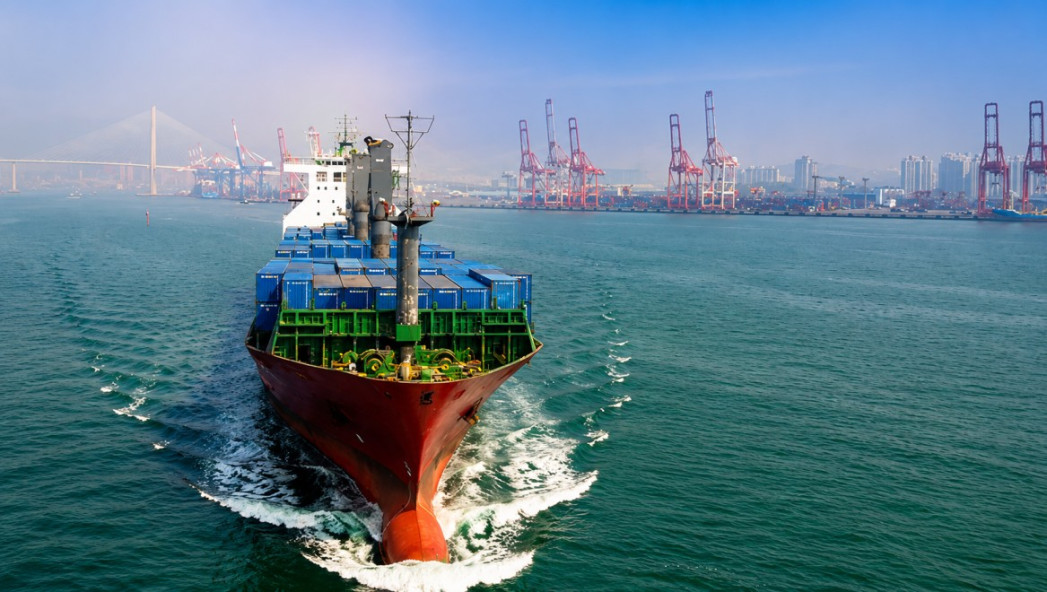
Loco News Bureau : As the Strait of Hormuz reopened following a ceasefire agreement between the United States and Iran, most vessels are leaving the Gulf in the Middle East, but Korean-affiliated shipping company Sinokor Maritime has been sending ships in the opposite direction, into the strait. The move is interpreted as positioning to capture the benefits of freight rates that surged when the strait reopened, but the prevailing view in the industry is that deploying new tonnage in the Gulf remains risky for now.
According to shipping trade publication TradeWinds on Tuesday, Sinokor Maritime, the world's largest owner of very large crude carriers (VLCCs), sent two of its vessels through the Strait of Hormuz into the Gulf on Sunday. During that single day, 12 tankers left the strait, while only seven vessels entered, including Sinokor Maritime's two ships. On Monday, only seven vessels were observed leaving the strait, with no tankers entering, reflecting the market's overall caution. This week, only three mainstream tankers have transited the Strait of Hormuz to enter the Gulf, including Sinokor Maritime's two.
Both of Sinokor Maritime's two vessels were confirmed to be moving past Qatar toward the Gulf. Earlier, Sinokor Maritime had aggressively positioned tonnage in preparation for the strait's reopening, including holding up to 14 VLCCs on standby in the Gulf of Oman early this month.
Sinokor Maritime's actions are interpreted as a strategy to gain an early advantage in the competition to secure cargo that will arise when traffic begins to recover in earnest. According to global shipping research firm Clarksons, the average daily VLCC freight rate recently reached $179,600, up more than 90% from the previous week. However, this is analyzed as a fluctuation driven by improved market sentiment rather than an actual increase in trading activity.
The industry still maintains a cautious view on deploying vessels. While refiners, traders, and shipowners view the reopening of the Strait of Hormuz under the ceasefire positively, they do not accept it as a complete "reset." Eva Chima, head of research at vessel valuation specialist Cass Technavia, explained, "Despite the reopening announcement, traffic remains well below normal levels, and while many vessels are leaving, there is reluctance to enter. This shows hesitation about deploying new tonnage in the Gulf."
Indeed, as the "Strait of Hormuz exodus" continues following the ceasefire agreement, Korean vessels have also been leaving the strait one after another. The Ministry of Oceans and Fisheries said Tuesday, "Four vessels operated by our shipping companies that had been on standby on the inner side of the Strait of Hormuz have transited the strait and are sailing normally." Following two Korean vessels that left the Strait of Hormuz after the US-Iran ceasefire agreement, four more transited the strait, leaving 18 Korean vessels currently inside the strait. The ministry said, "For the 18 of our vessels on standby on the inner side of the strait, we will support shipping companies in establishing their own operating plans and in future safe transit by providing transit-related trends and information."
Regarding Sinokor Maritime's vessels attempting to enter the strait in the opposite direction, the ministry said, "The two tankers that have currently entered the Gulf do not fall under the category of Korean vessels managed by the ministry." The ministry's criteria for classifying a vessel as "our ship" are "a Korean-flagged national vessel" or "a vessel under bareboat charter by a shipping company that will become Korean-flagged after the charter ends." On the other hand, vessels that a shipping company sent out on re-charter after a short-term lease, or vessels not flying the Korean flag, do not qualify. Under these criteria, the ministry's position is that the two Sinokor Maritime vessels that transited the Strait of Hormuz to enter the Gulf on Sunday are not "Korean vessels," and therefore the matter is not one for the government to restrain or manage. Excluding these vessels, no reverse-direction navigation movements have been detected among vessels belonging to Korean-flagged shipping companies, it was reported.
Sinokor Maritime is a Korean-flagged ocean carrier established in 2008, with Director Jung Ga-hyun, son of Sinokor Merchant Marine Chairman Jung Tae-soon, holding a 100% stake. Since December last year, it has aggressively purchased VLCCs and now operates a fleet of 80 ships, with 14 more awaiting delivery. The market estimates that Sinokor Maritime controls 20-25% of the mainstream VLCC fleet. This large-scale purchasing was carried out with financial support from MSC, the world's largest shipping company, and in the process, a plan for MSC to acquire a 50% stake in Sinokor Maritime is being pursued. Read the original news........
Comments (0)
No record(s) Found !